

- Bear Canisters
- What food I packed
- Resupply
- Restaurant Recs
Bear Canisters:
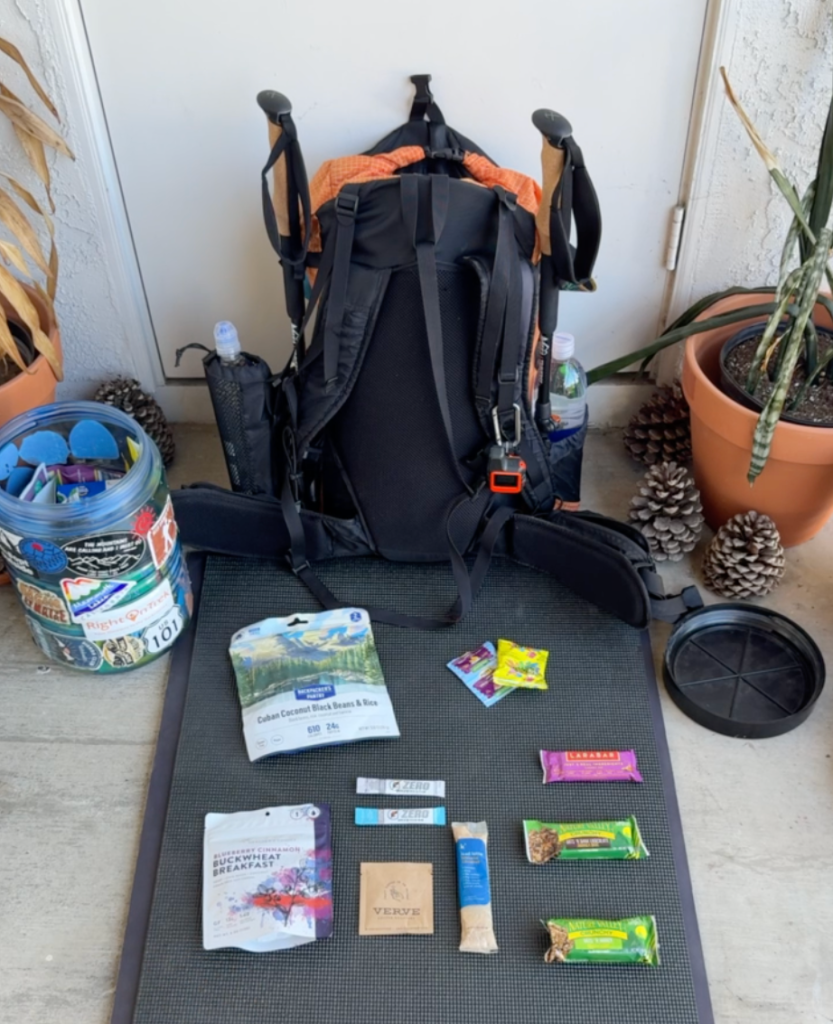
Hard sided bear canisters are now required along the whole Tahoe Rim Trail. It used to be only Desolation Wilderness that required it, but with the active bear population in Tahoe it is now required on your entire trip.
Using a bear canister is a good idea not only for your own safety, but also for the bear’s. Obviously we do not want bears stealing our food, or rummaging through our campsites. And when bears get access to human food, it reinforces a human-food connection and encourages negative habits that a bear may pass down to their cubs. We have the saying, “a fed bear is a dead bear,” for a reason.
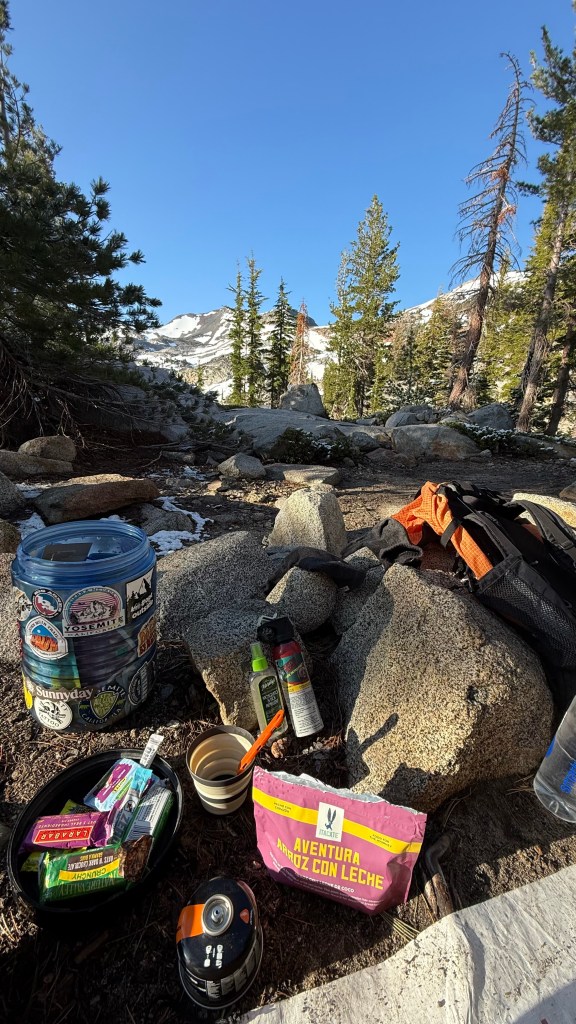
I used the Bear Vault 500 Journey on this adventure. The BV500 is Bear Vault’s largest bear canister and can fit around 7-8 days of food.


Resupply:
With a backpacking trip lasting over a week, and especially one where the trail leads right through a town, it’s a good idea to plan a resupply. On the Tahoe Rim Trail the best resupply location is Tahoe City because the trail takes you right into the town. This is one of the reasons I decided to start and end my hike at Spooner South Trailhead, so Tahoe City falls a little more than halfway through my hike.
I had booked a room at the Pepper Tree Inn in Tahoe City before starting my hike. I planned to get there on day 6 and would resupply while I was there. Since I drove myself to Tahoe, I figured I could drop off my resupply box in Tahoe City myself instead of mailing it to the Post Office or one of the local outdoor retailers who accept resupply packages. I didn’t read anything online about Pepper Tree accepting resupply boxes but I figured that since I had a room booked and I was showing up there myself, it was worth asking if they could hold on to the box for me, and they did!
Pepper Tree Inn: http://www.peppertreetahoe.com/
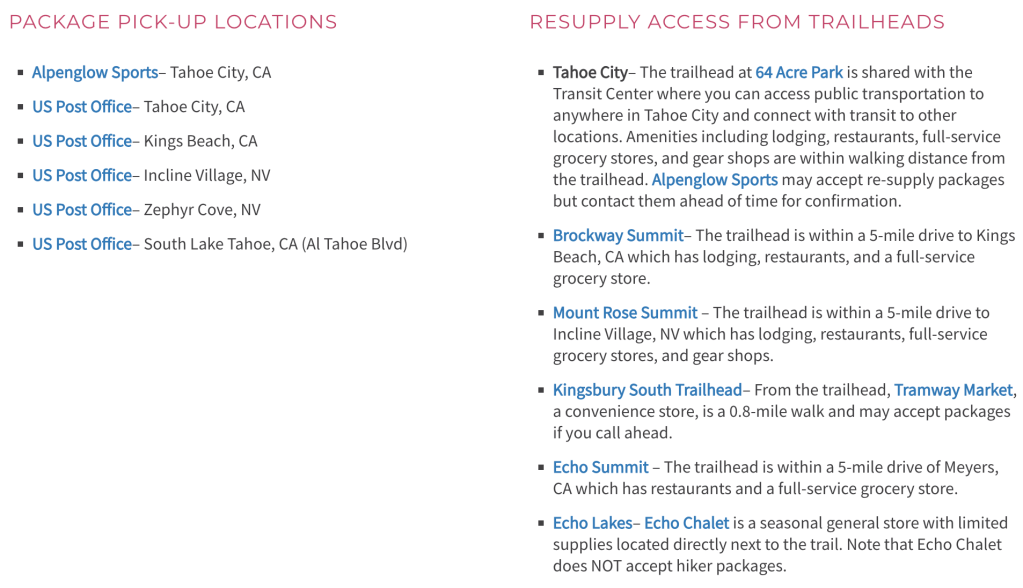
The TRTA website offers the following information for resupply locations and access:
Food I packed:
So when it comes to nutrition on trail, my philosophy is: don’t pack it if you’re not gonna eat it. My eating habits on trail are different from my every day eating habits and it took me lots of trial and error to figure out what actually works for me. When I first got into backpacking I prioritized nutrient dense “healthy” foods. I also paid close attention to calories and would meal plan for at least 3,000 calories a day. But when it came time to eat on trail I found my self dreading meal times and force feeding myself just to make sure I was getting enough calories which is not a fun experience.
Long distance thru-hikers are known to eat lot’s of junk food on trail – things like snicker’s bars, honey buns, nerds clusters, and potato chips. These foods are easy to eat, high in calories, and always taste good, which means you are more likely to eat them on trail. I have started to adopt more of this mentality and pack things that I am looking forward to having and that maybe I don’t get to have as often in my every day life.
I have also figured out a routine that works for me while I’m hiking:
- Breakfast: usually coffee and oatmeal or a bar if I’m feeling lazy
- Snacks: I try to eat a snack every hour or two on trail, no lunch or big midday meal
- Drinks: I alternate between electrolytes and regular water
- Dinner: a hearty backpacking meal
- Dessert: a sweet treat or hot cocoa to end the day on a good note
This style of eating may not be for everyone, so I encourage you to experiment to find your own eating style on trail!
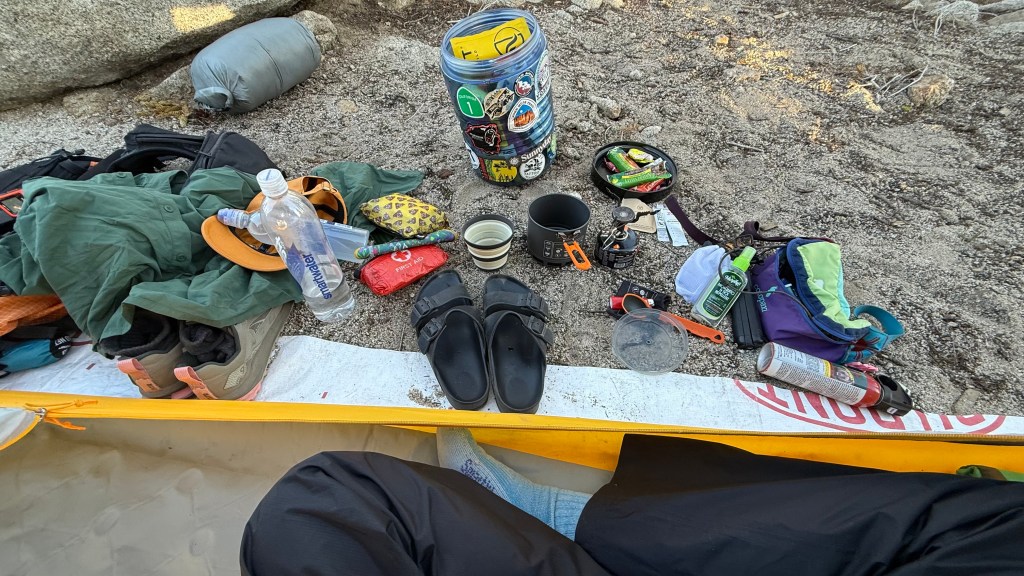
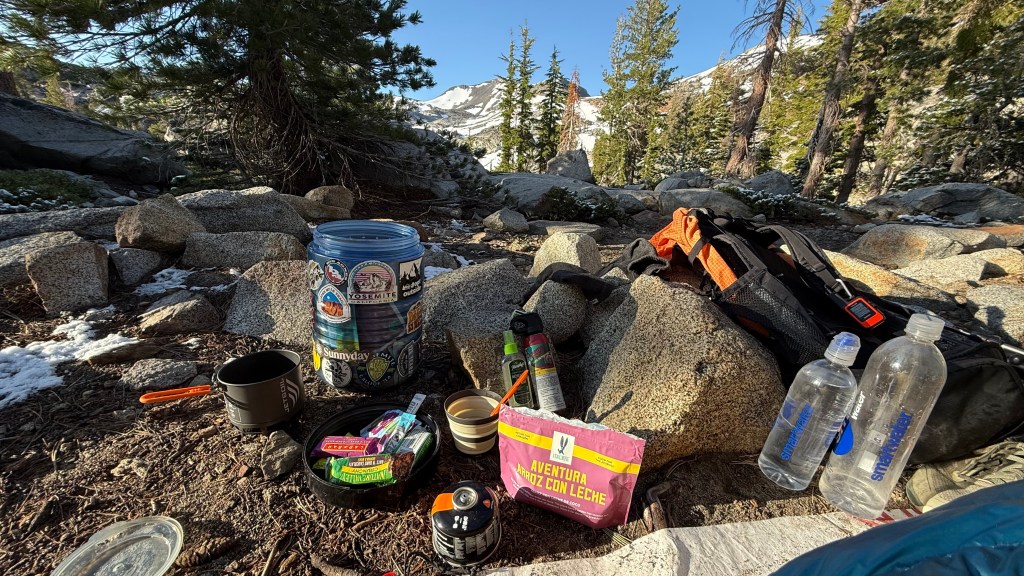
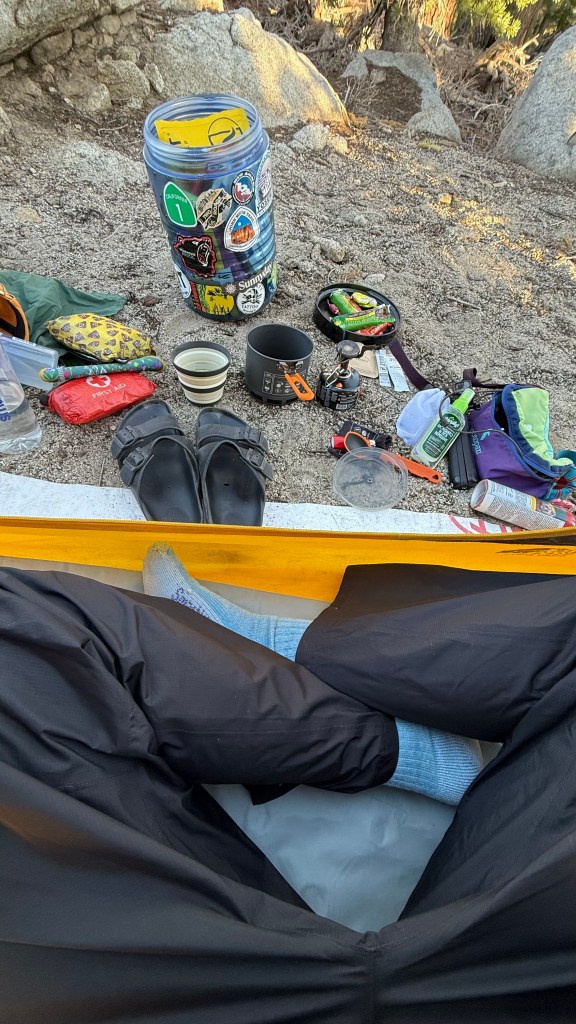
Here are some of the foods that I packed and ate on my trip:
Breakfast:
- Verve: instant coffee
- Joi: powdered oat creamer
- hot chocolate
- oatmeal
- Itacate: Arroz con leche
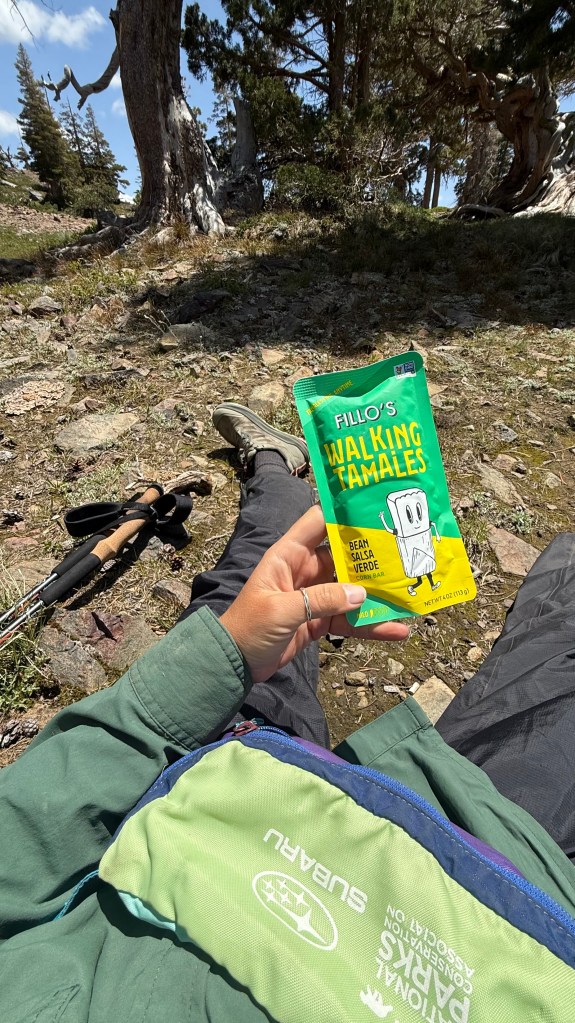
- Walking Tamales
Snacks:
- Nature Valley Bars
- Lara Bars
- Aloha Bars
- Solely Fruit Jerky
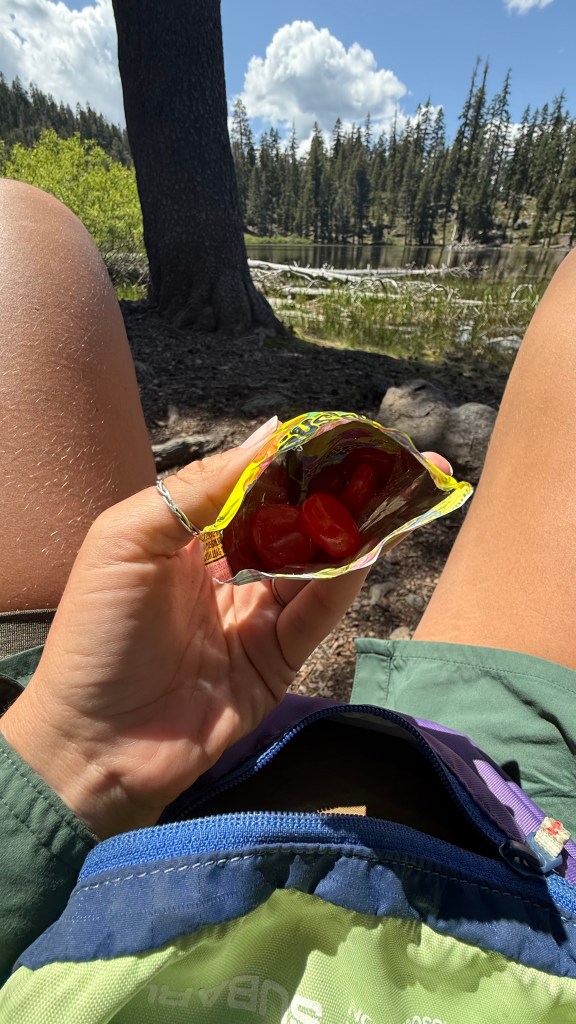
- Gushers
- Louisville Vegan Jerky Co.
- Gatorade Electrolyte Powder
- Ricola Cherry Lozenges – I recently started packing these to help get me through dry sections and manage altitude sickness and wow they help so much!
Dinners:
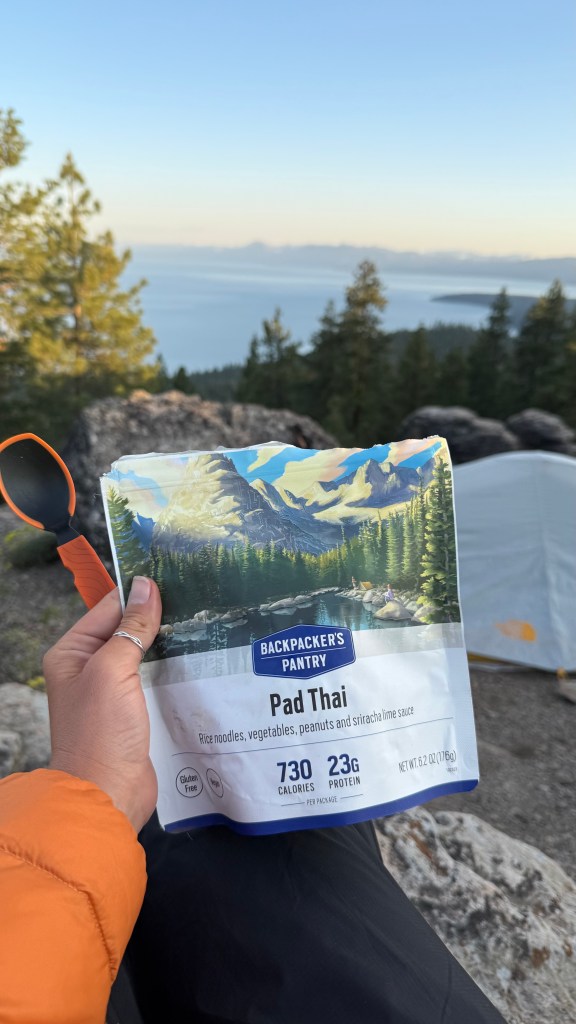
- Backpacker’s Pantry:
- FirePot
- Good To Go
- Momofuku Noodles (+ packet of PB)
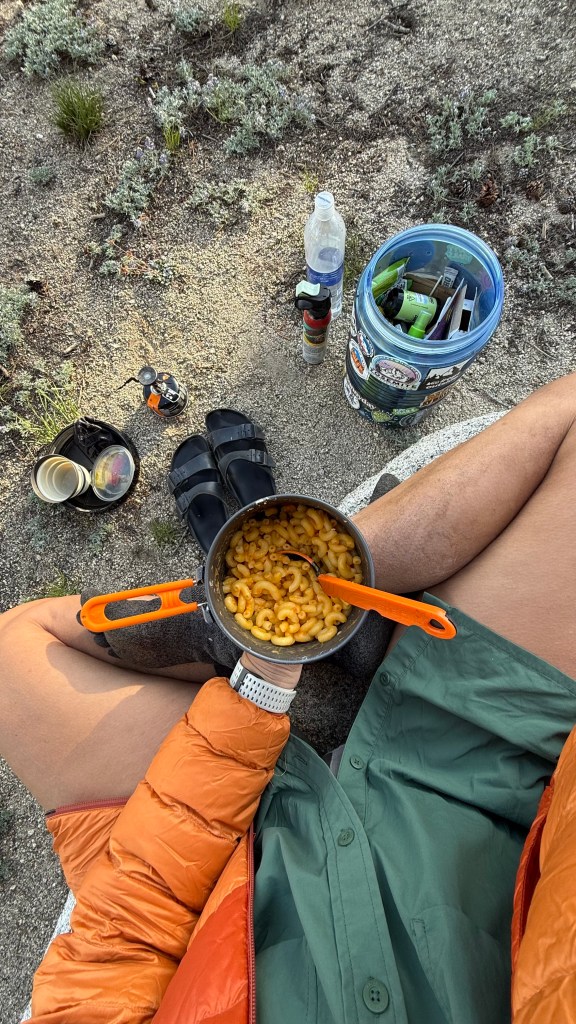
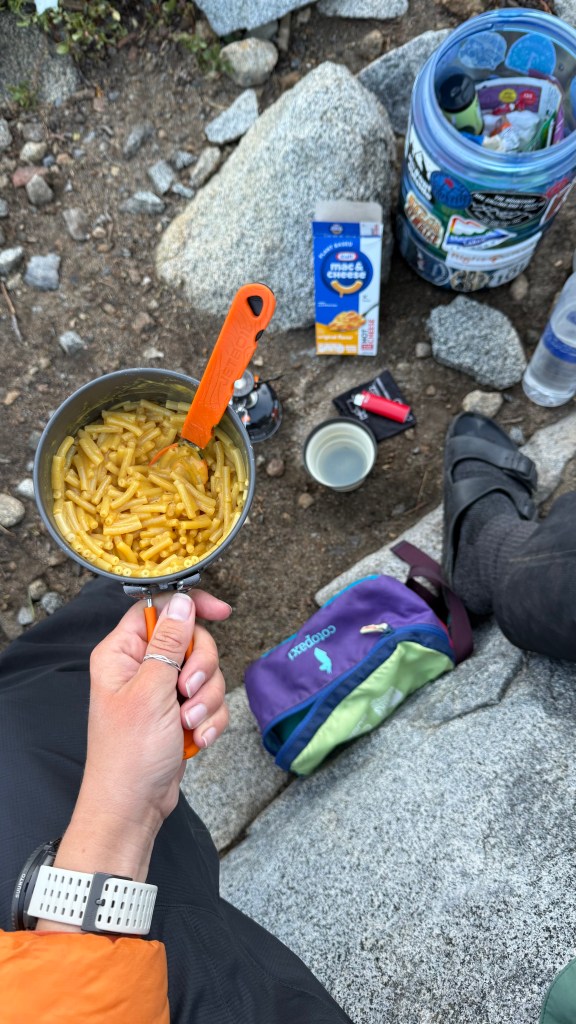
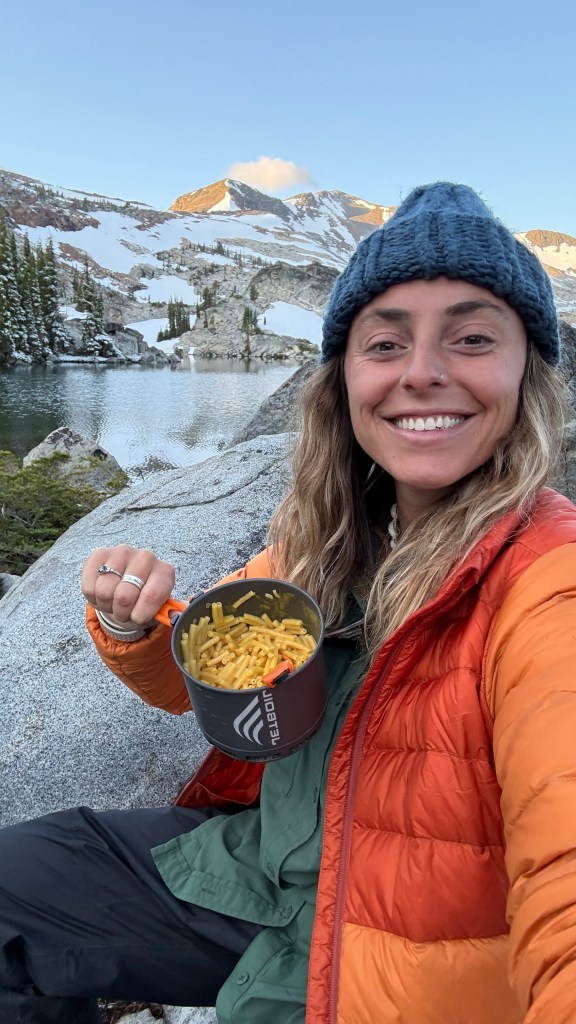
- Kraft Mac n’ Cheese (+ packet of hot sauce)






Restaurant Recs:

Tahoe City
- Fat Cat Bar and Grill: https://www.fatcatrestaurants.com/
- This spot is right next door to Pepper Tree Inn!
- Tahoe Tap Haus: http://www.tahoetaphaus.com/
- I stopped here for lunch on my way into town before I could check in to the hotel (good thing they have outdoor seating, cuz I was stanky!)
- The Dam Cafe: http://www.thedamcafe.org/
- Great for breakfast and coffee before hitting the trail on the way out!


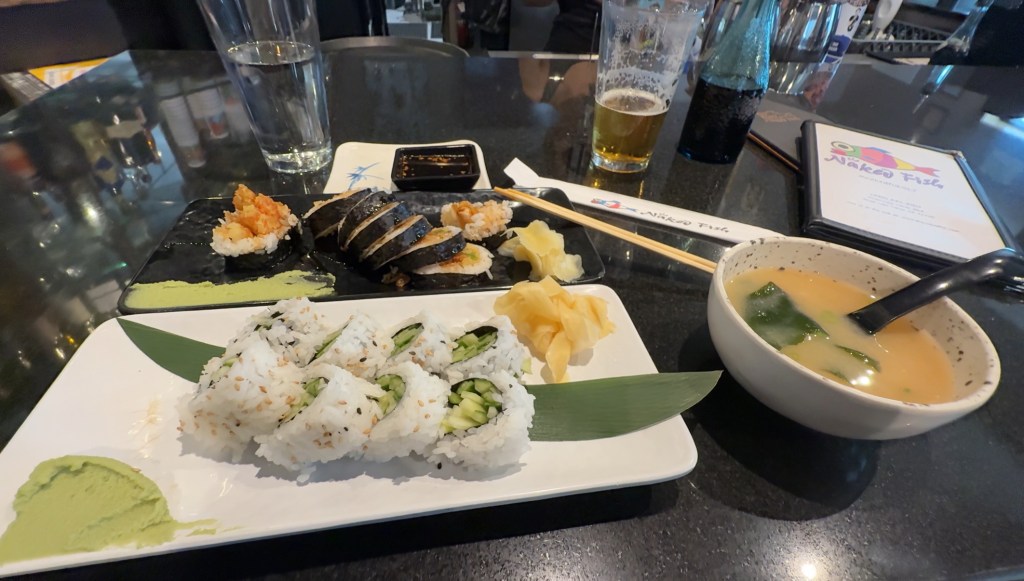
South Lake Tahoe
- MyThai Cuisine: https://www.mythaitahoe.com/
- Blue Dog Pizza: http://bluedogpizzatahoe.com/
- The Naked Fish: http://thenakedfish.com/
- Ernie’s Coffee Shop: http://erniescoffeeshop.com/
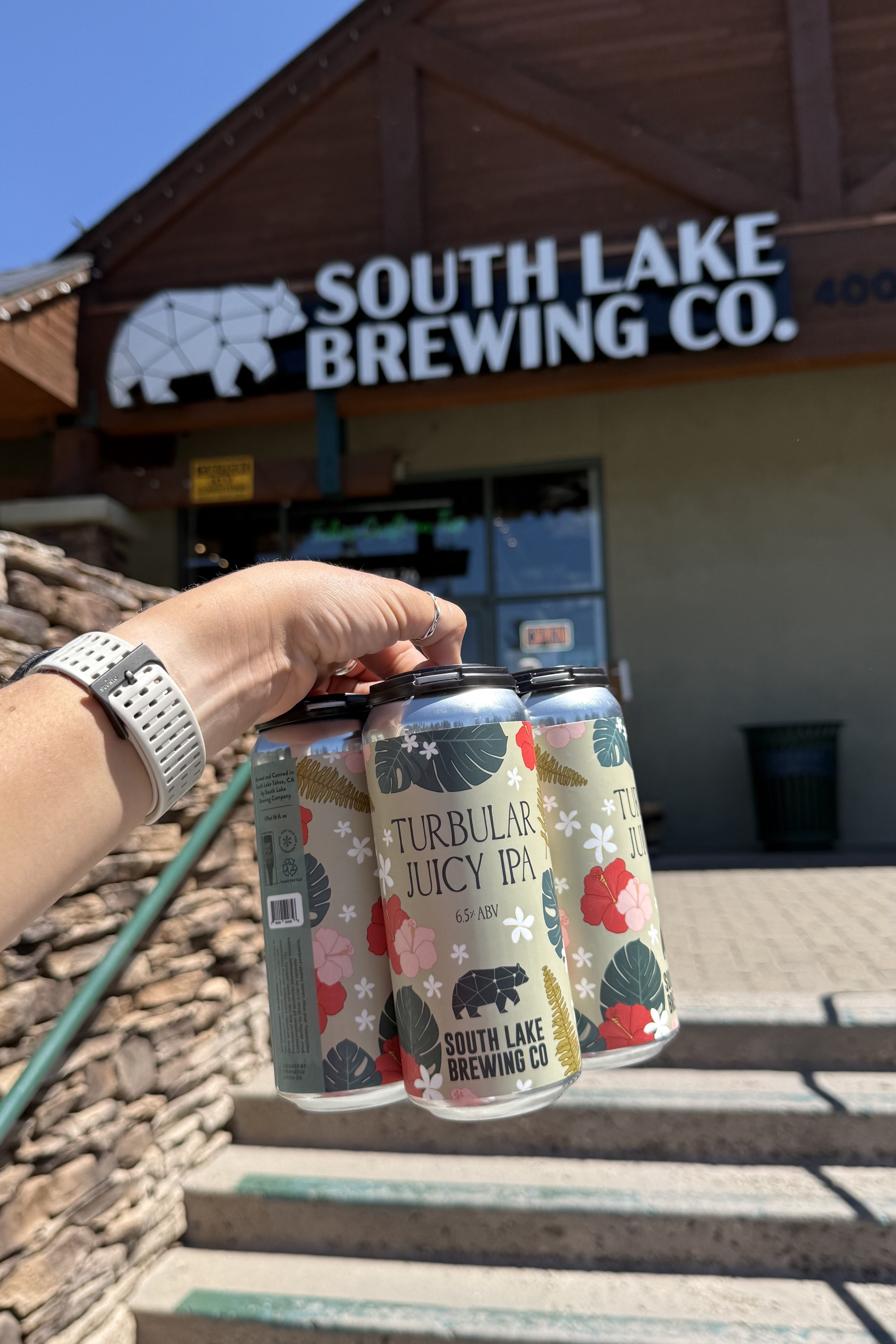
- South Lake Brewing Co.: http://southlakebeer.com/
Happy Trails!

 Bee's Wild Life