
One of the reasons that I moved from the East Coast to Southern California was the access to a diverse range of outdoor spaces; from sea cliffs and endless beaches, to mountains with alpine lates, and deserts with slot canyons and giant sand dunes. There are so many wonderful places to hike, camp, and backpack all within driving distance! I look forward to the weekends and holiday breaks when I can run out into nature and explore someplace wild and new. My favorite way to get outside is backpacking; walking all day with everything I need on my back, out of service, miles away from civilization, surrounded by endless beauty that enlivens all of your senses.
Man, I love backpacking.
Over the years, I have learned to plan my backpacking trips with the seasons, heading to the mountains in the summer and the desert in the winter. Some of my favorite SoCal desert environments are Anza Borrego Desert State Park, Joshua Tree National Park, Mojave Desert/Mojave National Preserve, Death Valley National Park, and a few places in between.
I have also learned how to adjust my gear for the these different environments and seasons. While most of my gear is the same year-round, there are a few things that are specific to the desert and are important to consider.
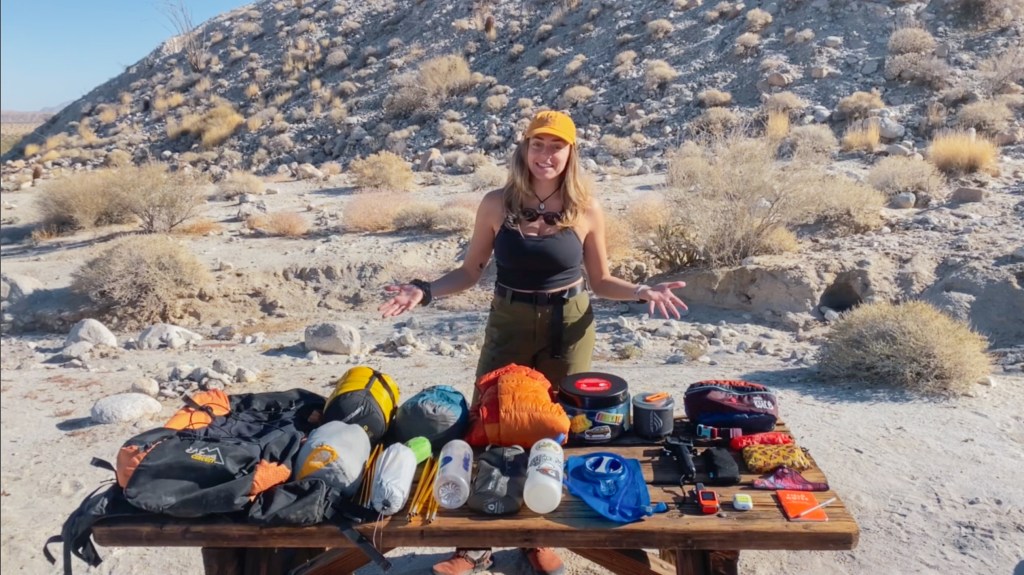
So, let’s go over everything I pack for an overnight backpacking trip in the desert in the winter.
Considerations:
- Weather:
- Temperature: It does in fact get cold and even snow in the desert! The average lows can be around 30 and the highs in the 70s.
- Precipitation: It’s important to check the weather before any trip, but when you are heading to the desert you will want to be especially mindful of rain. Flash floods are deadly and if you are camping in a canyon or wash and get caught in the rain, you might end up getting washed away. So make sure you keep an eye on the weather before and during your trip.
- Wind: It can get pretty windy in the desert which makes it feel colder. It will also kick dust up into your eyes while you’re hiking. Sunglasses and rain pants serve as good protection from the wind.
- Water: In most cases there will be no water sources, which means you will be carrying all the water you need. Of course you need water to drink, but you will likely also need water to cook your food. On an overnight trip I aim to bring 6-8L of water depending.
- Weight: Water will be the heaviest thing in your pack. If 1L of water weighs 2.2lbs, and I am bringing 6 liters of water on an overnight trip, that’s 13.2 pounds of water (or if I brought 8L = 17.6lbs)! And because water is a top priority in the wilderness, you will want to cut weight from your pack in other areas. Going ultralight, or buying the most lightweight options can be very expensive, especially for someone who is starting out. So, the next best way to lighten you pack is to look at your gear and cut out some of the luxury items. Now if you think about your gear in terms of wants and needs, the needs are non-negotiable, but the wants are what some people consider to be the “luxury items” which are the first to go. Some luxury items that you can do without include:
- No Pillow: Use your stuff sack instead
- No Camp Shoes: Just wear your trail runners around camp
- No extra clothes: clean clothes to sleep in and rewear your hiking outfit
- Minimal Toiletries: no deodorant or scents, embrace the stink!
Gear Checklist:
Backpack: ULA Circuit 68L
Shelter: The North Face Storm Break 1P
Sleep System:
- Sleeping Bag: Sea to Summit Spark 15 degree
- Sleeping Pad:
- Inflatable Pillow: Sea to Summit Aeros
Stuff Sack with Sleeping Clothes:
- Sea to Summit Dry Ultra-Sil Dry Bag 8L
- REI Midweight Base Layer Top and Bottom
- Smartwool Socks
- Knit hat: Handmade my me!
Layers:
- Puffy Jacket: REI 650 Down Jacket
- Rain Pants: REI Trailmade Rain Pants
Cook System: JetBoil Stash + Utensil
Food Storage: BearVault Sprint
Water Storage:
- Bottles: Nalgene 1.5L / SmartWater 1.5L
- Soft Bottle: 2L HydraPak
- Bladder with Hose: Camelback 3L
Toiletries: SpaceBear Bags
- toothbrush and toothpaste
- hand sanitizer
- menstrual cup
- Kula cloth
- chapstick
- face sunscreen
- WAG bag
First Aid Kit:
- Ibuprofen
- Benadryl
- bandaids
- gauze
- antibacterial ointment
- tweezers
- safety pin
- moleskin
- extra smart water bottle cap
- emergency hand warmers
Electronics:
- Satellite Device: Garmin InReach Mini
- Power Back: Anker Portable Charger
- Headphones: AirPods or wired headphones
- Video Camera: GoPro 13 Hero Black
- Headlamp: Petzl Actik Core
Hiking Outfit:
- Sun Hoodie: REI Sahara Shade Hoodie
- Baseball Cap
- Shorts: Stio Goodwin Shorts
- Sunglasses: Ombraz armless
- Trail Runners: Altra Running Lone Peak
Extras:
- Fanny Pack: Cotopaxi Bataan Del Dia
- Notebook: Field Notes Weatherproof
Downloads:
- Maps: AllTrails Plus, Avenza Maps, Gaia GPS
- Podcasts + Audiobooks: My Spotify
To see how I pack all this gear into my backpack, check out my YouTube video!
I hope this was helpful, and if you have any questions about the gear or my experience backpacking in the desert, leave a comment and let me know!
Or you can DM me on Instagram @beeswildlife
Thanks for hanging out!
Happy trails!
Bee C


Leave a Reply